
News
致力于为各行业提供:环形锻件、轴锻件、模锻件等自由锻造和模锻锻造件。In industrial applications, the reliability of flange connections is paramount, and 316L flange forgings have emerged as a preferred choice due to their exceptional corrosion resistance and mechanical strength. However, selecting the right 316L flange forging involves a comprehensive evaluation of multiple factors, as each decision directly impacts the performance, safety, and longevity of the final assembly. Whether for oil and gas, chemical processing, or marine engineering, understanding these critical considerations ensures optimal functionality and compliance with industry standards.
At the core of 316L flange forgings lies its chemical composition, which dictates its performance in harsh environments. The alloy typically contains approximately 16-18% chromium, 10-14% nickel, and 2-3% molybdenum, along with trace elements like sulfur and phosphorus. This combination provides superior resistance to corrosion, particularly in chloride-rich environments, making it ideal for applications like offshore oil rigs or chemical plants. The low carbon content (≤0.03%) in 316L further enhances its weldability and reduces the risk of intergranular corrosion, a critical factor for long-term durability. When evaluating material properties, manufacturers should verify the chemical composition through certified laboratory testing to ensure compliance with ASTM A182 or ASME B16.5 standards.
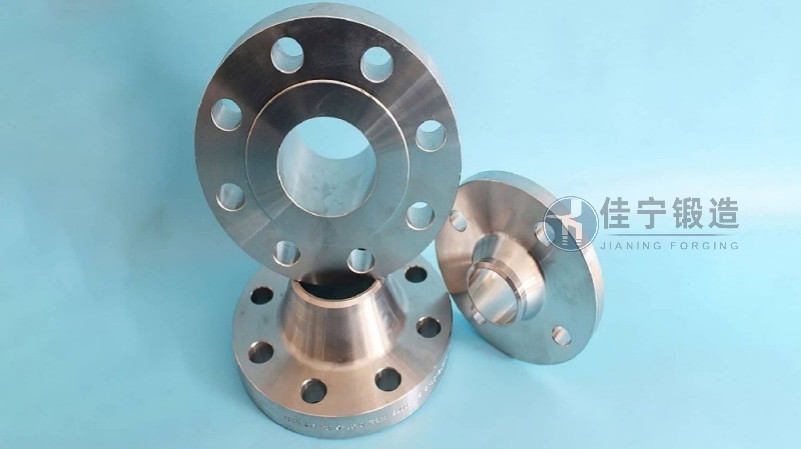
The manufacturing process of 316L flange forgings significantly influences their mechanical properties and dimensional accuracy. Hot forging, a common method for large flanges, involves heating the raw material to a high temperature and shaping it under pressure, which refines the grain structure and improves strength. Cold forging, used for smaller or more intricate designs, offers better surface finish and tighter tolerances but may require additional heat treatment to relieve internal stresses. Quality assurance is non-negotiable in this process; Jianing forging, for instance, employs advanced non-destructive testing (NDT) like ultrasonic testing and magnetic particle inspection to detect internal defects. Additionally, adherence to heat treatment protocols, such as solution annealing, ensures the material maintains its corrosion resistance and mechanical integrity. These steps are essential to meet industry standards like ASME Section VIII or API 6A, which are critical for safety-critical applications.
Dimensional tolerances and surface finish are critical for the proper functioning of 316L flange forgings, as they directly affect sealing performance and installation efficiency. The dimensional accuracy of the flange face, bolt hole positions, and overall dimensions must align with the mating components (e.g., pipes, valves) to ensure a tight seal. For example, in high-pressure applications, even minor deviations in the flange thickness or radius can compromise the sealing surface, leading to leaks or equipment failure. Surface finish, typically measured in microinches, plays a key role in preventing gasket wear and ensuring consistent contact pressure. A smooth, polished surface (e.g., Ra 3-6 µin) reduces friction and enhances gasket life, while a rough surface may cause gasket extrusion or premature failure. Manufacturers like Jianing forging use precision CNC machining and grinding to achieve the required surface finish, ensuring compliance with standards like ISO 1302 or ASME B16.5.

Application-specific requirements vary widely across industries, and selecting 316L flange forgings requires tailoring the design to the operating conditions. For instance, in oil and gas pipelines, flanges must withstand high pressures (up to 10,000 psi) and temperatures (up to 600°F), demanding materials with high yield strength and thermal stability. In contrast, marine applications may require flanges resistant to saltwater corrosion and dynamic loads from waves. The pressure rating (e.g., Class 150, 300) and temperature range specified in the design must be matched with the flange's material and design. Additionally, flange types (e.g., slip-on, weld neck, blind) are chosen based on installation methods and load conditions. For example, a weld neck flange provides superior strength and fatigue resistance compared to a slip-on flange, making it suitable for high-stress applications. Understanding these application-specific needs helps avoid underdesign or overdesign, ensuring the flange operates efficiently within its intended parameters.
The reputation and certification of the manufacturer are critical factors in selecting 316L flange forgings, as they directly impact product quality and reliability. Reputable manufacturers like Jianing forging hold certifications such as ISO 9001 for quality management, ISO 14001 for environmental management, and ASME U or U2 stamps for pressure vessel components. These certifications ensure that the manufacturing process adheres to international standards, from raw material procurement to final inspection. Furthermore, experienced suppliers have a deep understanding of industry regulations, such as API 6A for oil and gas or DNV-OS-F101 for offshore structures, allowing them to provide customized solutions that meet specific project requirements. When evaluating suppliers, it is essential to check their track record, customer testimonials, and compliance with industry standards. A reliable supplier not only delivers high-quality products but also offers technical support, such as engineering assistance or material selection guidance, which is invaluable for complex projects.

When it comes to selecting 316L flange forgings for your industrial needs, making the right choice is essential to ensure performance, safety, and longevity. At Jianing forging, we specialize in manufacturing high-quality 316L flange forgings that meet the most stringent industry standards. Our commitment to material quality, advanced manufacturing processes, and rigorous quality control ensures that every flange we produce is reliable and durable. Whether you need standard or custom-designed flanges, our team of experts can help you navigate the key factors and select the right solution for your application. Contact us today to learn more about our 316L flange forgings and how we can support your project.

 Shanxi Jianing Forging Co., Ltd
 176 9623 6479(Manager Xue)
  176 9623 6479
  Cuijiazhuang Industrial Park, Dingxiang County, Xinzhou City, Shanxi Province
 telephone
top